Alliages médicaux
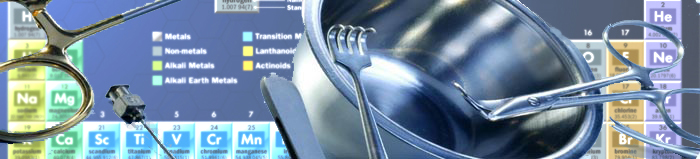
Les Lamineries MATTHEY SA sont impliquées dans le développement de la technologie médicale et livrent des matériaux de haute qualité nécessaires à cette industrie. Les matériaux utilisés pour fabriquer des implants ou des instruments chirurgicaux sont des aciers inoxydables austénitiques ou martensitiques, des aciers inoxydables durcissables par précipitation, des alliages à base de cobalt et du titane ou des alliages de titane. Les Lamineries MATTHEY, grâce à leur stock important et une logistique éprouvée, sont en mesure de servir leurs clients dans des délais très courts.
Les matériaux à usage médical fournis par les Lamineries MATTHEY SA sont élaborés selon des cahiers des charges généralement plus exigeants que les normes. Ils se distinguent ainsi par leur excellente constance des compositions chimiques et leur taux d'impuretés parmi les plus bas du marché (comme les inclusions de soufre par exemple).
Aciers inoxydables
Aciers inoxydables autenitiques
Alliages pour implants:
- Le 1.4441 (X2CrNiMo18-15-3, DIN 1.4441, ISO 5832-1, AISI 316LVM, ASTM F138-F139, UNS S31673). Le 1.4441 est un acier inox contenant du chrome, du nickel et du molybdène. Il est élaboré en utilisant le procédé de refonte ESR et respecte ainsi les normes ISO 5832-1 et ASTM F139 pour implants et instruments. Cet alliage a une très faible teneur en carbone et une microstructure homogène. Il se distingue donc par une excellente résistance à la fatigue et à la corrosion.
Alliage pour instrumentation:
- 1.4310 (X10CrNi18-8, DIN 1.4310, ~AISI 301): La résistance mécanique de l'acier 1.4310 est considérablement accrue par le laminage. C'est l'alliage le plus généralement utilisé pour les ressorts.
- 1.4310.4 (X10CrNi18-8, DIN 1.4310, ~AISI 301): Avec l'alliage 1.4310.4, les Lamineries MATTHEY SA proposent une nuance spéciale du 1.4310. Cet acier inox présente une résistance à la fatigue améliorée ainsi qu'un gain de résistance lors de la détente nettement supérieur à la version standard.
- 1.4404 (X2CrNiMo17-12-2, DIN 1.4404, ~AISI 316L): Grâce à la faible teneur en carbone et l'ajout de molybdène, le 1.4404 est plus résistant à la corrosion que le 1.4301, surtout dans des acides oxydants et en présence de chlorures. De plus, le 1.4404 est soudable sans devenir sensible à la corrosion intergranulaire.
- 1.4435 (X2CrNiMo18-14-3, DIN 1.4435, ~AISI 316L): Grâce à la teneur supérieure en molybdène par rapport au 1.4404, le 1.4435 est encore plus résistant à la corrosion, surtout dans des acides oxydants et en présence de chlorures. De plus, la résistance à la corrosion intergranulaire est excellente. Cet alliage est très utilisé dans l'industrie chimique.
Superalliages à base Cobalt
Alliages pour implants:
- Le Phynox, UNS R30003, (connu également sous le nom de Elgiloy*) est un superalliage austénitique durcissable à base de cobalt (40%Co, 20%Cr, 16%Ni et 7%Mo). Sa résistance mécanique peut atteindre plus de 2600 N/mm2 après durcissement, mais celle-ci dépend très fortement du taux d'écrouissage préalable. Il est amagnétique, extrêmement résistant à la corrosion (meilleur que tous les aciers inoxydables) et à la température (jusqu'à 400°C). La combinaison de son module d'élasticité très élevé (220kN/mm2) avec une limite élastique pouvant dépasser les 1800 N/mm2 font du Phynox un alliage ressort exceptionnel. Les Lamineries MATTHEY SA livrent des bandes en Phynox qui respectent les normes: ASTM F1058 (implants chirurgicaux), ISO 5832-7 (implants chirurgicaux), AFNOR NF S 90-403 (implants chirurgicaux) AMS 5875, AMS 5876 ainsi que la norme NACE MR0175.
*Elgiloy est une marque déposée de Elgiloy Specialty Metals.
Titane
- Ti - Titane Grade 2 / ASTM F67 / ISO 5832-2 / R50400 / ~3.7035 / T40. Le titane grade 2 ou le titane grade 1 correspondent aux catégories de pureté la plus élevée disponible sur le marché. Les impuretés limitées sont le fer, l'azote, l’hydrogène et l'oxygène, dont la présence augmente les caractéristiques mécaniques (dureté, limite élastique) mais diminue l'allongement à la rupture. Le Titane grade 2 présente une excellente résistance à la corrosion dans les milieux oxydants ou moyennement réducteurs, incluant les chlorures. Il a une bonne ténacité même à basse température, il peut être facilement soudé, usiné, déformé à froid et à chaud et il est amagnétique. Les Lamineries MATTHEY SA livre des bandes laminées en Titane grade 1 ou Titane grade 2 pour implants chirurgicaux, respectant les norme ASTM F67 et ISO 5832-2.
Alliages médicaux disponibles en bandes
| Superalliages | Fiche technique |
|---|---|
| MP35N® - R30035 / ASTM F562 / ISO 5832-6 |  MP35N_v22F.pdf
 |
| Phynox® - CoCr20Ni16Mo7, DIN 2.4711, ISO 5832-7, ASTM F1058, R30003 / R30008 |
Phynox_v22F.pdf |
| Aciers inoxydables | Fiche technique |
| 1.4310 - Acier Inox / X10CrNi18-8 / ~ AISI 301 |
1.4310_v22F.pdf |
| 1.4310.4 - Acier Inox / X10CrNi18-8 / ~ AISI 301 |
1.4310.4_v22F.pdf |
| 1.4401 - Acier Inox / X5CrNiMo17-12-2 / ~ AISI 316 |
1.4401-316_v22F.pdf |
| 1.4404 - Acier Inox / X2CrNiMo17-12-2 / ~ AISI 316L |
1.4404-316L_v22F.pdf |
| 1.4435 - Acier Inox / X2CrNiMo18-14-3 / ~ AISI 316L |
1.4435-316L_v22F.pdf |
| 1.4441 - Acier Inox (implants) / X2CrNiMo18-15-3 / ISO 5832-1 / ASTM F139 |
1.4441-316LVM_v22F.pdf |
| Autres spécialités | Fiche technique |
| Ti - Titane Grade 1 / ASTM F67 / ISO 5832-2 / 3.7025 / R50250 |
Titane-Gr1M_v22F.pdf |
| Ti - Titane Grade 2 / ASTM F67 / ISO 5832-2 / R50400 / ~3.7035 / T40 |
Titane-Gr2M_v22F.pdf |